23 May
Running a business sounds exciting until the paperwork starts piling up. One invoice says one thing, the purchase order says another, and the supplier swears they shipped everything correctly. Suddenly, your accounts payable team is stuck playing detective.
That’s exactly why 3-way invoicing exists.
It’s not flashy. It won’t trend on social media. But honestly? It quietly saves businesses from payment errors, supplier disputes, duplicate invoice payments, and even invoice fraud. And if your company handles vendor payments regularly, this process matters more than most people realize.
Let me explain.
First Things First — What Is 3-Way Invoicing?
3-way invoicing, also called 3-way invoice matching, is a financial control process businesses use to verify invoices before paying suppliers.
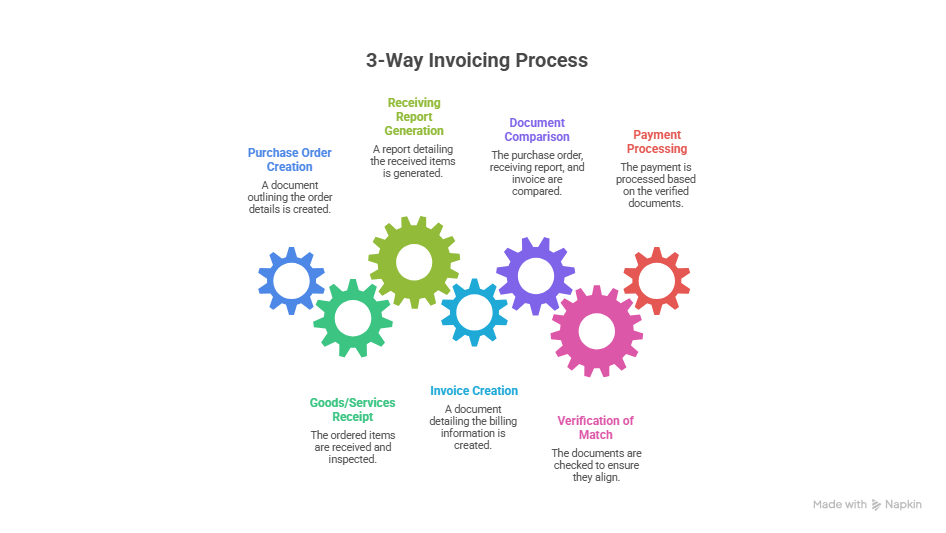
The system compares three important documents:
- Purchase Order (PO)
- Goods Receipt Note or Receiving Report (GRN)
- Supplier Invoice
If all three documents match, the payment gets approved.
If something doesn’t match — maybe the quantity is wrong, the price changed, or goods never arrived — the invoice gets flagged for review.
Simple idea. Huge impact.
Think of it like checking a restaurant bill before paying. You ordered two burgers, received two burgers, and the bill says two burgers. Great. You pay confidently.
But what if the bill suddenly says four burgers? You’d stop immediately, right?
That’s basically what businesses do with invoice verification systems every single day.
The Three Documents Used in 3-Way Invoice Matching
Here’s where many beginner guides get too technical. So let’s keep it practical.
1. Purchase Order (PO)
A purchase order is created when a business agrees to buy goods or services from a supplier.
It usually includes:
- Product details
- Quantity
- Pricing
- Delivery terms
- Supplier information
The PO acts like the original agreement.
2. Receiving Report or Goods Receipt Note (GRN)
This document confirms that the business actually received the products.
Warehouse staff or receiving departments typically create it after delivery.
So now the business knows:
- What arrived
- How much arrived
- Whether items were damaged
And honestly, this step catches a surprising number of supplier billing errors.
3. Supplier Invoice
Finally, the vendor sends the invoice requesting payment.
Now the accounts payable team compares:
- The purchase order
- The receiving report
- The invoice
If all details match, payment approval moves forward.
That’s the 3-way matching process in action.
Why Businesses Use 3-Way Invoicing
Here’s the thing — businesses lose money through small accounting mistakes all the time.
Not dramatic Hollywood-style fraud. Tiny leaks.
An extra zero. Duplicate invoices. Missing deliveries. Wrong quantities. Incorrect pricing. It adds up fast.
That’s why accounts payable automation and invoice matching have become standard in modern finance departments.
Main Benefits of 3-Way Invoicing
Better Financial Accuracy
Businesses avoid overpaying suppliers or paying for products they never received.
That alone makes the process worthwhile.
Reduced Invoice Fraud
Fake invoices happen more often than people think.
A strong invoice approval workflow helps businesses catch suspicious charges before money leaves the bank account.
And once money disappears? Recovering it can become messy, awkward, and painfully slow.
Cleaner Audit Trails
Auditors love documentation.
A proper invoice audit trail proves that:
- Purchases were approved
- Goods were received
- Payments were verified
That creates stronger accounting internal controls.
Fewer Supplier Disputes
When businesses use organized vendor invoice management, disagreements become easier to resolve.
You’re not arguing emotionally anymore. You’re comparing documents.
Paperwork suddenly becomes evidence.
How the 3-Way Invoice Matching Process Works
Let’s walk through a real-world example.
Imagine a clothing store orders 100 jackets from a supplier.
Step 1 — Purchase Order Created
The store creates a PO for:
- 100 jackets
- $25 each
Step 2 — Goods Arrive
The warehouse receives:
- 100 jackets
- No damage
A receiving report gets created.
Step 3 — Invoice Arrives
The supplier sends an invoice for:
- 100 jackets
- $25 each
Everything matches.
Payment approved.
Easy.
Now imagine the invoice says 120 jackets instead.
The invoice discrepancy gets flagged immediately.
Without a 3-way invoice verification process, that extra charge might slip through unnoticed.
And yes, businesses really do lose money this way. More than they’d like to admit.
2-Way vs 3-Way Invoice Matching — What’s the Difference?
People often confuse these systems.
2-Way Matching
This compares:
- Purchase Order
- Invoice
That’s it.
3-Way Matching
This compares:
- Purchase Order
- Receiving Report
- Invoice
The extra document creates stronger supplier payment verification.
It confirms the goods actually arrived before payment happens.
Honestly, relying only on 2-way matching can feel a bit like paying for an online order before checking whether the package showed up at your doorstep.
Risky? Sometimes, yes.
Manual vs Automated Invoice Matching
Now we hit the modern business question.
Should companies handle invoice matching manually or automate it?
Small businesses sometimes manage manually using spreadsheets and accounting software. That can work early on.
But once invoice volume grows, things become chaotic fast.
Human errors creep in:
- Duplicate payments
- Lost invoices
- Approval bottlenecks
- Delayed vendor payments
That’s why many companies now use:
- ERP invoice matching systems
- Accounts payable automation software
- AI invoice processing tools
Platforms like SAP, Oracle, and NetSuite already support automated invoice approval workflows.
And honestly, automation isn’t about replacing people. It’s about removing repetitive financial admin work that drains time and attention.
Common Problems in 3-Way Invoicing
Even good systems hit friction.
Here are the most common issues businesses face.
Price Mismatches
Sometimes suppliers change prices unexpectedly.
If the invoice doesn’t match the purchase order, payment gets delayed.
Partial Deliveries
A supplier may deliver only part of the order.
That creates confusion if the invoice requests full payment immediately.
Data Entry Errors
Manual invoice processing still causes problems.
One wrong digit can freeze the entire approval chain.
Delayed Approvals
Sometimes invoices sit untouched for days because managers forget approvals.
And suppliers hate delayed payments. Relationships can sour quickly.
How Small Businesses Can Improve Invoice Control
You don’t need a massive finance department to create better invoice controls.
Honestly, even small changes help.
Keep Purchase Orders Organized
Messy records create messy accounting.
Store documents centrally and label them clearly.
Use Invoice Automation Tools
A digital invoice approval system saves time and reduces human mistakes.
If your business still creates invoices manually, tools like Invoice Generator Pro can make the process smoother and far more professional. Clean invoices help suppliers trust your business faster — and yes, presentation matters more than people think.
Standardize Approval Workflows
Decide:
- Who approves purchases
- Who verifies deliveries
- Who processes payments
Clear responsibility prevents confusion.
Audit Vendor Payments Regularly
Even automated systems need human review occasionally.
Patterns matter.
A supplier sending duplicate invoices repeatedly? That’s a red flag worth investigating.
Why Invoice Matching Matters More Than Ever
Businesses are processing more digital payments than ever before.
Remote teams. Online procurement. International suppliers. Faster transactions.
And while technology improves speed, it also increases the chance of unnoticed financial mistakes.
That’s why strong financial control systems matter now more than they did a decade ago.
You know what’s interesting?
Many businesses only fix their invoice process after losing money.
That’s backwards.
Good procurement accounting workflows should prevent problems before they happen — not react afterward.
A Quick Word About Invoice Automation
There’s been a major shift toward AI invoice processing lately.
Some systems now:
- Read invoices automatically
- Detect discrepancies
- Route approvals
- Flag suspicious transactions
Pretty impressive stuff.
But here’s the truth nobody says loudly enough:
Automation only works well if the original invoices are clean and accurate.
Garbage in, garbage out.
That’s one reason businesses increasingly rely on simple, reliable invoice creation tools like Invoice Generator Pro. A professional invoice generator reduces formatting mistakes, improves consistency, and helps businesses maintain cleaner financial records from day one.
And honestly, suppliers tend to take polished invoices more seriously too.
Final Words
So, what is 3-way invoicing?
At its core, it’s a safeguard.
A practical system businesses use to verify:
- What was ordered
- What was received
- What’s being charged
Nothing fancy. Just smart financial control.
But those simple checks prevent:
- Invoice fraud
- Duplicate payments
- Supplier disputes
- Costly accounting errors
And whether you run a small business, manage procurement workflows, or oversee accounts payable teams, that protection matters.
A lot.
Because when financial processes stay organized, businesses operate with less chaos, fewer surprises, and stronger trust between suppliers and accounting teams.
And honestly? That peace of mind is hard to put a price on.

Akbar Ali is the Founder of InvoiceGeneratorPro.io, a platform dedicated to helping freelancers, small businesses, startups, agencies, and entrepreneurs create professional invoices quickly and efficiently. With years of experience in digital business, SEO content strategy, and online entrepreneurship, he focuses on developing practical tools and educational resources that simplify invoicing, payment management, and financial documentation.As a business writer and digital entrepreneur, Akbar creates in-depth guides, industry insights, and actionable content covering invoicing, freelancing, accounting basics, business finance, taxation, productivity, and payment solutions. His goal is to make complex financial processes easy to understand while helping professionals save time and present their businesses more professionally.Through InvoiceGeneratorPro.io, he continues to build reliable, user-friendly solutions that empower businesses worldwide to streamline their billing workflows and improve financial organization.
Akbar Ali