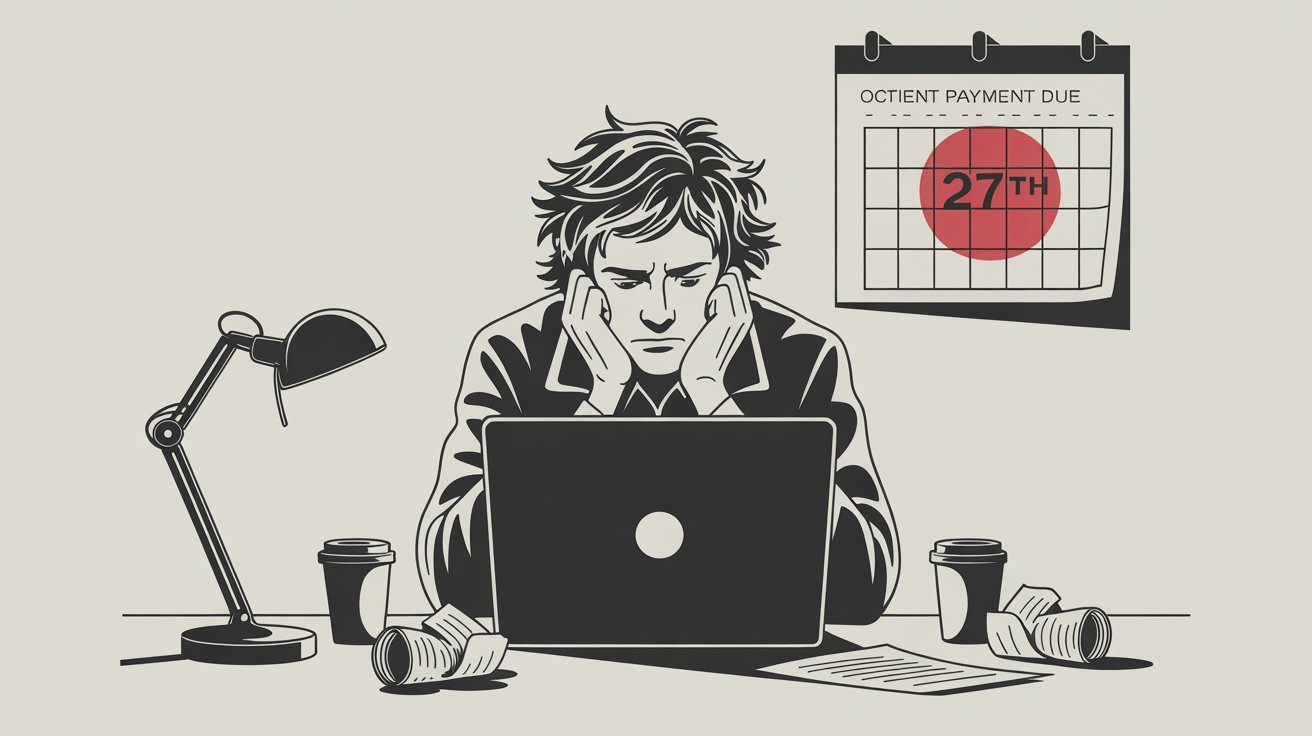
Let’s not pretend this is easy.
You finish the work. You send the invoice. And then… silence.
No reply. No payment. Just that quiet, slightly irritating gap where you start wondering, “Did I say something wrong?”
Here’s the thing: asking for payment isn’t about money—it’s about communication. And most people mess it up not because they’re rude, but because they’re unsure.
Let me explain.
😬 Why Asking for Payment Feels So Awkward
You’re trying to balance two things that don’t naturally sit well together:
- Being polite
- Getting paid
That tension creates hesitation. And hesitation leads to vague messages like:
“Just checking in…”
Which, honestly, clients ignore all the time.
“Clarity beats politeness when money is involved.”
That doesn’t mean you become aggressive. It means you become clear, calm, and structured.
🧠 Why Clients Delay Payments (And What You’re Probably Doing Wrong)
Before blaming clients, let’s flip the lens for a second.
Here are the real reasons payments get delayed:
| Reason | What It Actually Means | Fix |
|---|---|---|
| Invoice wasn’t clear | Missing details, confusing totals | Use structured invoices |
| No urgency | No due date or follow-up | Set deadlines |
| Low priority | You didn’t reinforce value | Remind them of outcome |
| Avoidance | They forgot or are delaying | Follow up consistently |
| Process issues | Approval delays, accounting bottlenecks | Make payment easy |
Most freelancers and small businesses don’t fail at work—they fail at billing communication.
🧾 Step-by-Step: How to Ask for Payment Professionally
Let’s break this into a system you can repeat.
1. Start Strong (Your First Invoice Matters More Than You Think)
Your invoice shouldn’t just ask for money—it should signal professionalism.
Instead of sending random PDFs, use a proper tool like
👉 Our Free Invoice Generator
It helps you:
- Create clean, professional invoices
- Add due dates clearly
- Reduce confusion (which means fewer excuses)
Honestly, most payment issues start with messy invoices.
2. Your First Message (Friendly, Not Weak)
Right after sending the invoice:
Hi [Client Name],
I’ve shared the invoice for the completed work. Please let me know if everything looks good on your end.
Payment is due by 2026.
Thanks again!
Simple. Direct. No fluff.
3. First Follow-Up (Gentle Reminder)
If the due date passes:
Hi [Name],
Just a quick reminder regarding the invoice sent on 2026.
Let me know if you need anything from my side.
Appreciate your help!
Notice the tone—not passive, not aggressive.
4. Second Follow-Up (More Direct)
Now you tighten things slightly:
Hi [Name],
Following up on the pending invoice.
Please confirm when I can expect the payment.
Thanks!
This is where many people hesitate. Don’t.
5. Final Notice (Firm, But Still Professional)
Hi [Name],
This is a final reminder regarding the outstanding invoice.
Please arrange payment by 2026 to avoid any disruption in future work.
Let me know if there are any issues.
That’s it. No drama. Just structure.
📧 Payment Request Email Examples
Sometimes you don’t need theory—you need words you can copy, tweak, and send.
✔️ After Project Completion
Subject: Invoice for Completed Work
Hi [Name],
I’ve attached the invoice for the completed project.
Please review and let me know if everything looks good.
Payment is due by 2026.
Thanks again for the opportunity!
✔️ Advance Payment Request
Hi [Name],
Before we begin, I’d like to confirm the initial payment as discussed.
Once received, I’ll proceed immediately with the work.
Let me know if you need the invoice again.
✔️ Friendly Nudge Before Due Date
Hi [Name],
Just a quick heads-up that the invoice is due on 2026.
Let me know if everything is in place for payment.
💬 Polite Invoice Reminder Messages
Short messages often work better—especially when clients are busy.
- “Hi [Name], just a quick reminder about the invoice. Let me know if you need anything from my side.”
- “Hey, following up on the invoice shared earlier. Appreciate your update.”
- “Hi, just checking if the invoice is scheduled for payment. Thanks!”
The key? Keep it light, but not vague.
📩 Second Payment Reminder Email Template
This is where you stop being overly soft.
Subject: Follow-Up on Pending Invoice
Hi [Name],
I wanted to follow up regarding the invoice sent on 2026, which is still pending.
Please let me know the expected payment date.
Looking forward to your update.
🚨 Final Payment Notice Template
This is your line in the sand.
Subject: Final Reminder – Payment Required
Hi [Name],
This is a final reminder regarding the outstanding invoice.
Kindly arrange payment by [specific date].
If there are any issues, please let me know immediately.I’ll need to pause further work until this is resolved.
No threats. Just consequences stated calmly.
🔁 How to Follow Up on Unpaid Invoices (Without Sounding Desperate)
Most people fail here because they either:
- Follow up too softly
- Or wait too long
Here’s a simple structure you should stick to:
| Stage | Timing | Message Tone |
|---|---|---|
| First Reminder | 1–3 days after due date | Friendly |
| Second Reminder | 5–7 days later | Direct |
| Final Notice | 10–14 days later | Firm |
Consistency beats intensity.
Also—don’t just resend the same email. Change wording slightly. It signals intent.
📩 Email vs WhatsApp vs Call — What Works Best?
Different situations need different approaches.
| Method | When to Use | Strength |
|---|---|---|
| Formal clients, corporate work | Professional record | |
| Quick reminders, small clients | Faster response | |
| Call | Long delays, high-value invoices | Direct pressure |
If a client is ignoring emails, switch channels. Don’t just repeat the same method expecting different results.
🤝 How to Negotiate Payment Terms with Clients
Here’s where you prevent problems before they start.
Most freelancers skip this—and then complain later.
Smarter approach:
- Ask for 30–50% upfront
- Set clear due dates (not “flexible”)
- Define late payment conditions
Example:
“The project will begin after a 40% advance payment. The remaining balance is due within 7 days of delivery.”
Simple. Clear. Hard to argue with.
If you don’t set terms, clients will set them for you—and you won’t like it.
🧠 Psychology of Getting Clients to Pay Faster
Let’s get real for a second.
Clients don’t pay based on fairness. They pay based on:
- Urgency
- Clarity
- Pressure (subtle, not aggressive)
What actually works:
- Deadlines → “Due by Friday” works better than “whenever possible”
- Specific language → “Please confirm payment date” beats “let me know”
- Consistency → Regular follow-ups make you harder to ignore
And here’s the uncomfortable truth:
“If you sound optional, your payment becomes optional.”
💰 What If the Client Still Doesn’t Pay?
Now we’re in the uncomfortable zone.
Let’s be honest—this happens more than people admit.
Here’s what you do:
- Stop being overly polite
- Start being structured
- Introduce consequences (subtly)
“Politeness without boundaries leads to delayed payments.”
Practical moves:
- Pause ongoing work
- Mention contract terms
- Send a final notice
And yes—this is where having a proper invoice system helps again.
👉 Use a professional invoice generator
It keeps your billing clean, trackable, and harder to ignore.
💡 Freelancer & Small Business Tips That Actually Work
You know what separates people who get paid fast?
Not skill. Not even pricing.
It’s process.
A few grounded tactics:
- Ask for advance payment (even 30%)
- Always define payment terms upfront
- Use automated invoice reminders
- Avoid vague wording like “whenever possible”
Small shifts, big impact.
🧰 Tools & Templates That Make This Easier
Let’s keep it practical.
If you’re still manually writing invoices or reminders, you’re making your life harder.
Use tools that:
- Generate professional invoices instantly
- Include payment terms
- Make follow-ups easier
👉 https://invoicegeneratorpro.io/
It’s simple, fast, and built for freelancers and small businesses.
📌 Key Takeaways
- Clarity beats politeness when asking for payment
- Always include due dates and structured follow-ups
- Don’t rely on one message—follow-up consistently
- Use tools to avoid confusion and delays
- Stay polite, but don’t be passive
❓ FAQs (People Actually Ask These)
How do you politely ask a client for payment?
Be direct but respectful. Mention the invoice, due date, and ask for confirmation—avoid vague language.
What is a professional way to request payment?
Use structured emails with clear timelines and follow-ups. Keep tone neutral, not emotional.
How do you remind a client about payment without being rude?
Focus on the invoice, not the person. Say “just a reminder regarding the invoice” instead of sounding personal.
What should I do if a client ignores payment requests?
Switch communication channels, send a final notice, and pause work if necessary.
How many reminders should I send?
Typically:
- 1 before due date
- 1 after due date
- 1 final notice
After that, escalate.
🧭 Final Thought (No Sugarcoating)
If you’re not getting paid on time, it’s not just “bad clients.”
It’s usually:
- Weak communication
- No structure
- No system
Fix those—and suddenly, things change.
Not overnight. But fast enough to notice.
And honestly? That’s the difference between struggling freelancers and professionals who run things like a business.

Akbar Ali is the Founder of InvoiceGeneratorPro.io, a platform dedicated to helping freelancers, small businesses, startups, agencies, and entrepreneurs create professional invoices quickly and efficiently. With years of experience in digital business, SEO content strategy, and online entrepreneurship, he focuses on developing practical tools and educational resources that simplify invoicing, payment management, and financial documentation.As a business writer and digital entrepreneur, Akbar creates in-depth guides, industry insights, and actionable content covering invoicing, freelancing, accounting basics, business finance, taxation, productivity, and payment solutions. His goal is to make complex financial processes easy to understand while helping professionals save time and present their businesses more professionally.Through InvoiceGeneratorPro.io, he continues to build reliable, user-friendly solutions that empower businesses worldwide to streamline their billing workflows and improve financial organization.
Akbar Ali